A guide for social dance enthusiasts… of dances other than ballroom.
It’s pretty common for me to run into misconceptions about ballroom dancing when I talk to avid dancers who practice other social styles. Social dance hobbyists tend to end up in one “scene” or the other, depending on how they got started dancing. Did you go to a night club one time when you heard there was a Salsa lesson? Maybe you saw a cool video of West Coast Swing dancers on Youtube, and then decided to find a class? Perhaps you always harbored the ambition to learn Tango, and then finally pulled the trigger and booked a lesson?

I hear “origin stories” like these ones all the time about how people got started dancing. Most of the time, if they went to that Salsa class, they end up as avid Salsa dancers. Likewise, the dancer who took the West Coast class probably became a West Coast Swing hobbyist and the guy who signed up for a Tango lesson is a regular at your local Milongas. I do meet a lot of people who start with one dance style and then quickly diversify within their group; most Salsa dancers I know also learn Bachata and Merengue, and many branch out to related Latin club dances like Zouk, Casino, Kizomba, Cha Cha and even Latin Hustle; many Swing dancers venture out to Blues, or they alternate amongst East Coast, West Coast and Lindy Hop. Some more ambitious social dancers strike out beyond their “scene,” crossing the boundaries. Quite a few Swing dancers I know are dabbling in Zouk, and several people I’ve met at Salsa events are dipping their toes into the West Coast pond. Ballroom origin stories are no different; the couple who ended up at a ballroom studio to get ready for their son’s wedding is probably still going to ballroom dance socials on Saturday nights, long after the wedding is over.
The main difference is that ballroom dancers learn lots of dance styles right out of the starting gate! It is a common misconception amongst mentally-overwhelmed beginners that learning multiple dances at a time would be too much to handle. In reality, being a beginner dancer is going to be mentally overwhelming no matter what you’re learning. The overwhelming aspect comes from learning to do social partner dances when you’ve never done them before—going from being a non-dancer to being a dancer is the big challenge! In my experience, it doesn’t make a difference whether you’re learning one dance style or learning five. The patterns and skills needed to learn one social dance translate to all of them. Certainly, many dances have specialty elements on an advanced level that set them apart aesthetically from the rest. But on a beginner level, movements and lead/follow functionality are similar no matter what dance you’re doing. Ballroom dancers start out learning lots of dances, so they end up doing lots of dances!
The only thing different about ballroom dance events is that you do more dances (see my post on “What are the ‘ballroom dances’?“). Otherwise, they aren’t any different from other types of social dance events. Some people imagine that ballroom dances are super fancy, that everyone is dressed in formal attire, that people are snooty and look askance at newcomers. But just like any other dance scene, ballroom dancers are thrilled to see newcomers! They are so happy when new people take up their favorite hobby, because, just like every other type of dance, the more ballroom dancers there are, the more people they have to dance with, the more people participate in the hobby, the more dance friends they have, and, eventually, as the local hobbyist group gets bigger and bigger, that means even more events and even more opportunities to dance!

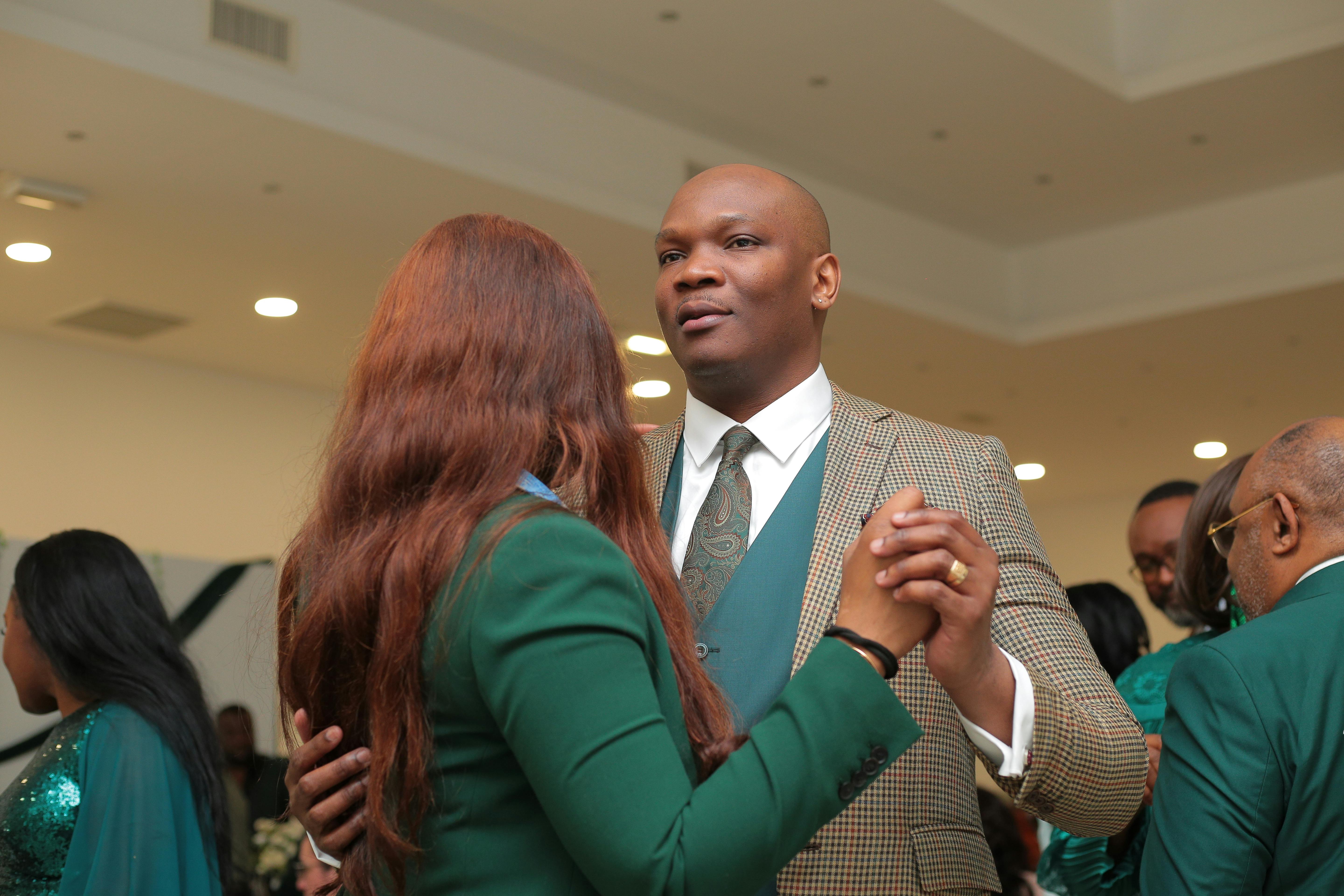
So, then, what is it like at a ballroom dance? Contrary to many of the preconceived notions I referenced above, ballroom dancers aren’t any more formal or fancy than anyone else. They are, after all, dance hobbyists like you, living in the same city as you. At most ballroom dances I attend in Pittsburgh, you will see jeans and T-shirts. Trousers and collared shirts (usually polos) are common attire for men. Many women wear dresses or skirts, but there are also plenty who wear slacks. A few attendees may come in a fancier dress, or a button-down shirt with a tie or vest, but those are “dressy” outliers; you’ll find the same thing at almost any dance event, people who come a little extra dressed up just because they want to wear something special for a night out. Ballroom isn’t any different, in that sense, than any other dance community.
What sets ballroom dancers apart from other communities of social dancers is simply that they stake a claim to ALL the partner dances. That’s not to say everybody who goes ballroom dancing knows all the social dances, or even that they know all the dance styles played at their favorite events. Ballroom dancers show up at a social expecting to dance to the majority of songs played, knowing that they will be sitting out (water break!) for a handful of tracks. Ballroom dancers are also resourceful; just because the DJ indicates that a particular song is intended to be for a particular dance, ballroom dancers might pick something else. It is common to see people dancing Hustle AND Cha Cha to the same song; often those who don’t do Quickstep will Jitterbug instead; I joke about dancing Cha-sw-ustle-coast, because Cha Cha, Swing, Hustle and West Coast can all be done to songs within a common speed range; you might see Rumba and Bachata, or Bolero and Nightclub Two Step, or Samba and Salsa, or American Tango, International Tango and Argentine Tango, all to the same song. Suffice to say, you don’t need to know every single social dance styles in order to dance a lot at a ballroom event. When you get right down to it, any 4-count social dance can be done to any 4-count song; it’s the nuance of the music that makes ballroom dancers select one from among the dances they know. Part of the fun for a ballroom dancer is figuring out what dance matches up best to favorite songs. “Ooo, what would you dance to this?” is a common topic of conversation between ballroom dancers when a song comes on at restaurant or on the car radio. One time I remember, in the middle of December, I had a student who showed up for her lesson, excited to tell me: “I just realized… so many Christmas songs are Fox Trots!” Obviously, there are some ballroom dancers who get very serious about the hobby and do exhibitions or competitions (just like there are in any social dance group) and they concentrate on a fixed selection of dances for those purposes. But on a hobbyist level, ballroom dancers are just people who like doing a bunch of different dance styles. It helps them feel more expressive to all their favorite types of music.
If you want to get started with ballroom dancing, the best way is simply to start doing it. If you’re already a hobby dancer, that’s probably how you started with your current dance style, right? The good news is that you already know one or more dances that are likely to be played at a ballroom dance event, so now you just need to populate your repertoire with more dances—take comfort that the basic steps of most ballroom dances are A LOT easier than your current dances (yes, I’m looking at you Salsa and West Coast dancers!). If you’re a complete beginner at dancing, then it couldn’t be simpler—you just need to find a ballroom teacher and get started with lessons.
Whether you’re a total dance beginner or an experienced social dancer in other styles, the BEST way to get into ballroom is with personalized instruction. Group classes are fun for socializing, but group instruction is the slowest way to learn. Taking personalized dance lessons as an individual leader or follower, or for you and your partner, dancing as a couple, will give you the fastest results, especially if you want to learn multiple dances to maximize your ballroom dancing functionality. Of course, you could also live on the wild side and just jump in to a ballroom dance social. They usually offer a group class on one selected dance style before the social begins; and some more experienced attendees will be helpful and try to show you things as the night goes on. Be warned that learning ONLY in group classes and from off-the-cuff hobby dancers can be less than effective. A few people learn okay in groups, but the majority of students I’ve worked with have had troublesome and frustrating experiences trying to learn from scratch in group settings. I recommend finding a personal lesson teacher who does ballroom—get started there and then group classes will be a good way to enhance and reinforce what you’re learning in personalized lessons. Your personal teacher will also be able to help you troubleshoot anything you didn’t quite understand in any group classes you attend.
The moral of the story is: don’t let the multiplicity of ballroom dances keep you away! Learning a diverse repertoire of dances is actually a huge part of the fun!
DANCE MORE WITH DANCE FRIENDS
Get Started with Lessons
Browse our Events Feed
Subscribe to our Newsletter
Follow us on FACEBOOK
Follow us on INSTAGRAM
TEXT us 412-712-7131
EMAIL us PittsburghDance@gmail.com
Leave a Reply